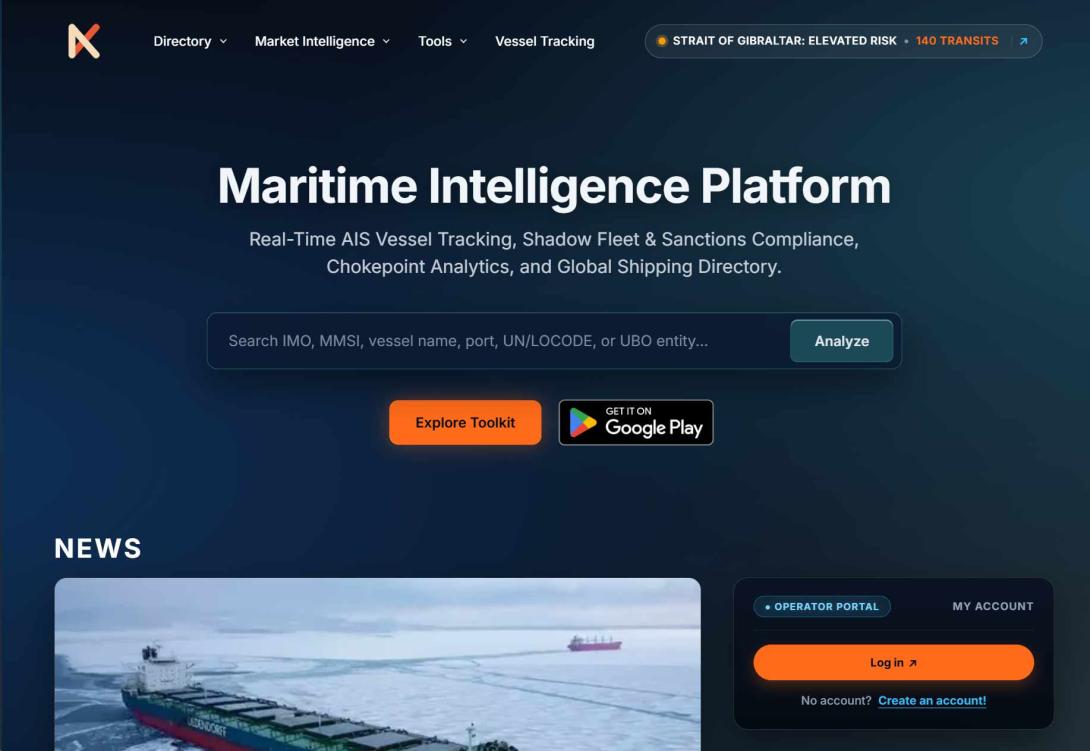
Nautic Nexus honestly started because a few of us at Antares got weirdly obsessed with watching cargo ships crawl across the Mediterranean late at night. Nobody planned a commercial launch. There wasn't any pitch deck or grand roadmap sitting in a shared folder. We just wanted to pull live ship coordinates onto a clean map and see where freighters were heading after leaving port. Pretty quickly, though, you start noticing odd behavior out on the water. Vessels go dark right off certain coastlines or swap flags three times in half a year, and half the registered owners trace back to random shell offices. So we wrote scripts to flag that stuff automatically. Before long, a late-night hobby had turned into our own internal maritime market intelligence platform.
Building something that eats live global shipping traffic meant we couldn't get lazy with the backend. Everything runs on FreeBSD servers behind Nginx, because when you're dealing with non-stop socket connections and background daemons, boring Unix stability wins every single time. Drupal 11 powers the main web portal and industry news section, saving us from coding basic user accounts and editorial workflows from scratch. Structured relational data and all our maritime directories sit in MariaDB where strict schemas belong. Putting live vessel pings into SQL tables would've choked the box within an hour, though. High-volume live AIS vessel telemetry dumps way too many writes per second, so we routed every moving ship position and historical track straight into MongoDB to keep teh site fast.
Splitting the database workload like that let us build tools that go way past little dots on a blue map. Right now the platform pairs real-time AIS vessel tracking with shadow fleet analytics, catching older tankers that spoof coordinates or run dark ship-to-ship transfers out at sea. We also wired in sanctions watchlists so brokers and compliance teams can screen restricted owners in seconds. And since nobody in shipping sits behind a desk all day, we built a companion Android app in Flutter. Mobile maps are brutal on memory. Getting thousands of live vessels to render smoothly on a phone screen without cooking the battery took way more late nights than we care to admit.
Shipping our own internal software at Antares keeps us sharp in a way client specs rarely do, mostly because we're the ones waking up at three in the morning if a parser hangs. Nautic Nexus is out in production now. We're still pushing updates almost every week as we plug in deeper port stats and tighter tracking filters. But you don't have to take our word for how it runs. Head over to www.nauticnexus.com to poke around the live radar and directories on desktop, or grab the Android app on the Google Play Store at play.google.com/store/apps/details?id=com.nauticnexus.nautic_nexus and test it out on your phone.